 International
Available Domestic
U.S Domestic
Available Domestic
Dragon Pharma
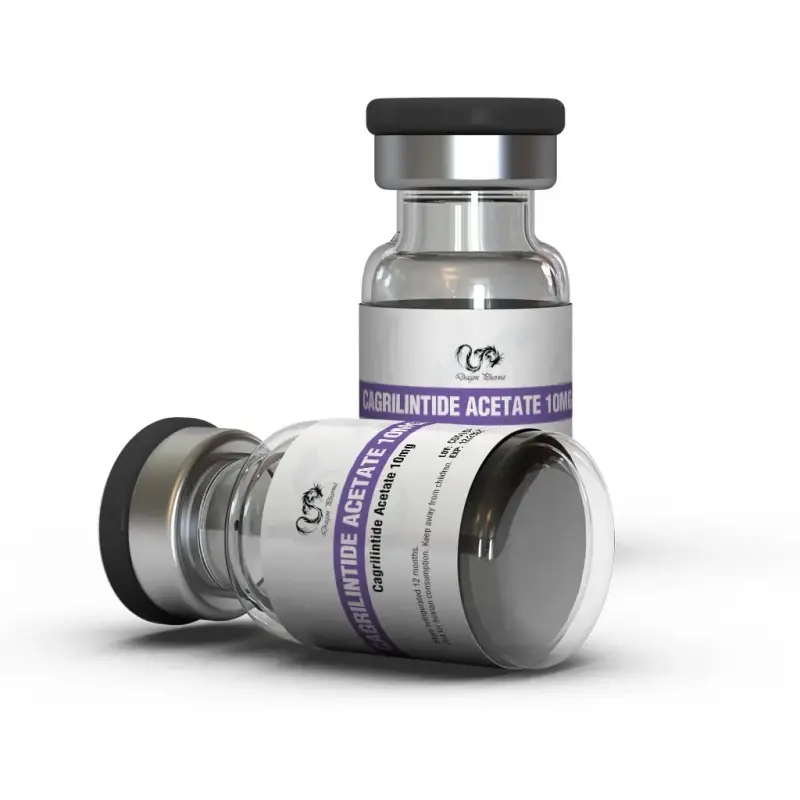
Dragon Pharma Cagrilintide 10 mg - Amylin Research Peptide Vial
Injection · 10 mg · vial
In stock · ships within 24h
Out of stock
$160.00
Dragon Pharma Cagrilintide 10 mg is a long-acting amylin analogue supplied as a lyophilised research vial. It works through amylin receptors rather than the incretin pathway, so it is the non-GLP-1 reference point for satiety research in the weight-management group.
Each vial is GMP-manufactured and HPLC-verified, with a Certificate of Analysis on file. Reconstitute with bacteriostatic water. Cagrilintide 10 mg for sale with U.S. domestic and international shipping.
Shipping
Not available in this combination
Discreet plain packaging
Worldwide reship guarantee
Crypto & card accepted
Product overview
Dragon Pharma Cagrilintide 10 mg - Long-Acting Amylin Analogue
Dragon Pharma Cagrilintide 10 mg supplies the amylin analogue cagrilintide as a lyophilised 10 mg research vial. It is an investigational peptide with no approved label and no assigned ATC code, developed for metabolic research in the same clinical area as the GLP-1 peptides, but it does not act on the GLP-1 receptor. Cagrilintide for sale from a GMP manufacturer with independent testing and a Certificate of Analysis on file per batch.
- Cagrilintide 10 mg per lyophilised research vial
- Long-acting amylin receptor agonist (code GLXC-26801)
- Reference half-life 159 to 195 hours in phase 1b data
- GMP-manufactured, HPLC-verified, COA on file per batch
How Cagrilintide Works
Cagrilintide is a long-acting analogue of amylin, the satiety hormone co-secreted with insulin by pancreatic beta cells. Amylin receptors sit in the area postrema and other hindbrain regions, so the signal reaches appetite control through a different route from the incretin peptides: it slows gastric emptying, reduces meal size and lowers food intake without touching the GLP-1 receptor. That is why cagrilintide is studied both alone and next to Semaglutide, including a phase 2 arm that combined 2.4 mg cagrilintide with 2.4 mg semaglutide.
Research Amounts and Handling
No human dose is approved for this vial, so every figure is research practice. Phase 1b studied 0.16 to 4.5 mg subcutaneously once weekly, and the reference half-life of 159 to 195 hours, with a peak at 24 to 72 hours, is what supports that weekly interval; for comparison semaglutide measured 145 to 165 hours in the same study. Because accumulation matters at a week-long half-life, laboratory work models steady state rather than single doses. Reconstitute the 10 mg vial with bacteriostatic water: 2 ml gives 5 mg per ml and 1 ml gives 10 mg per ml. Store the powder at 2-8 C away from light and the solution refrigerated.
Quality & Authenticity
Every batch is produced under GMP conditions and checked by independent HPLC, with the Certificate of Analysis held for the batch. In the phase 2 data about 31.6% of participants lost at least 15% of body mass against about 4.7% on placebo, so the appetite signal is real in a research setting. Cagrilintide is not interchangeable with Tirzepatide or Retatrutide, which act on incretin receptors, and it is not an approved therapy.
For laboratory research only. Consult a healthcare professional before use.
Specifications
| Trade Name | Cagrilintide 10 mg |
| Generic Name | Cagrilintide (GLXC-26801) |
| Manufacturer | Dragon Pharma |
| Dosage | 10 mg per lyophilised vial |
| Package | 1 vial of powder for reconstitution |
| Drug Class | Long-acting amylin receptor agonist (research peptide) |
| Administration | Reconstitute with bacteriostatic water, subcutaneous injection |
| Reference Half-Life | 159 to 195 hours in phase 1b data |
| Shipping | International and U.S. domestic options |
Stacks
Consult a healthcare professional before any cycle. Doses are common community protocols.
FAQ
Before you ask
Questions, answered
It is cagrilintide, a long-acting analogue of the hormone amylin, sold as a lyophilised 10 mg research vial. It has no approved label and no assigned ATC code, so it remains an investigational peptide. It is developed in the same metabolic research area as the GLP-1 peptides but acts on amylin receptors instead, which makes it a different mechanism rather than a variant of semaglutide.
Amylin is co-secreted with insulin by pancreatic beta cells and signals satiety through receptors in the hindbrain. Cagrilintide mimics that signal, slowing gastric emptying and reducing meal size and food intake without binding the GLP-1 receptor. Because the pathway is separate, the peptide is studied both on its own and alongside GLP-1 agonists, including a phase 2 arm that combined 2.4 mg of each.
Phase 1b data report 159 to 195 hours, which is roughly a week, with a peak concentration 24 to 72 hours after the dose. Semaglutide measured 145 to 165 hours in the same study, so the two are comparable in duration. A week-long half-life is why weekly dosing is used and why accumulation has to be considered in laboratory planning.
In phase 2 data about 31.6% of participants lost at least 15% of body mass against about 4.7% on placebo, and phase 1b explored subcutaneous amounts from 0.16 to 4.5 mg weekly. Nausea, vomiting, constipation and diarrhoea were the common side effects reported, appetite can fall far enough to reduce food intake, and injection site reactions are the usual local effect. No human safety data exist for this research vial.
No. Cagrilintide is an amylin analogue and Semaglutide is a GLP-1 receptor agonist; they are two separate peptides that have been studied together, but a cagrilintide vial contains only the amylin analogue. The same is true of the incretin products Tirzepatide and Retatrutide, which are their own molecules.
Yes. The 10 mg vial is listed on this page with international and U.S. domestic shipping options, and the price charged matches the option you select. Orders are dispatched after payment confirmation. The material is sold strictly for laboratory research, and no detection window or approved human dose is established for it.
No reviews yet
Be the first to share your experience with Dragon Pharma Cagrilintide 10 mg - Amylin Research Peptide Vial
Log in to write a reviewComplete the cycle
Stack it with
International
Available Domestic
 International
 International
Available Domestic