 International
Available Domestic
International
Dragon Pharma
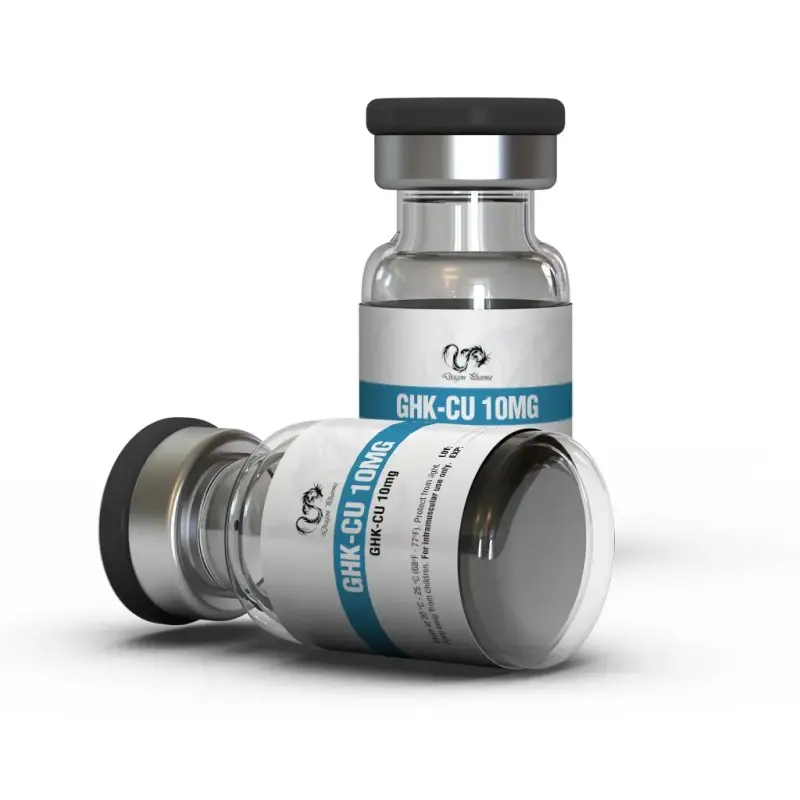
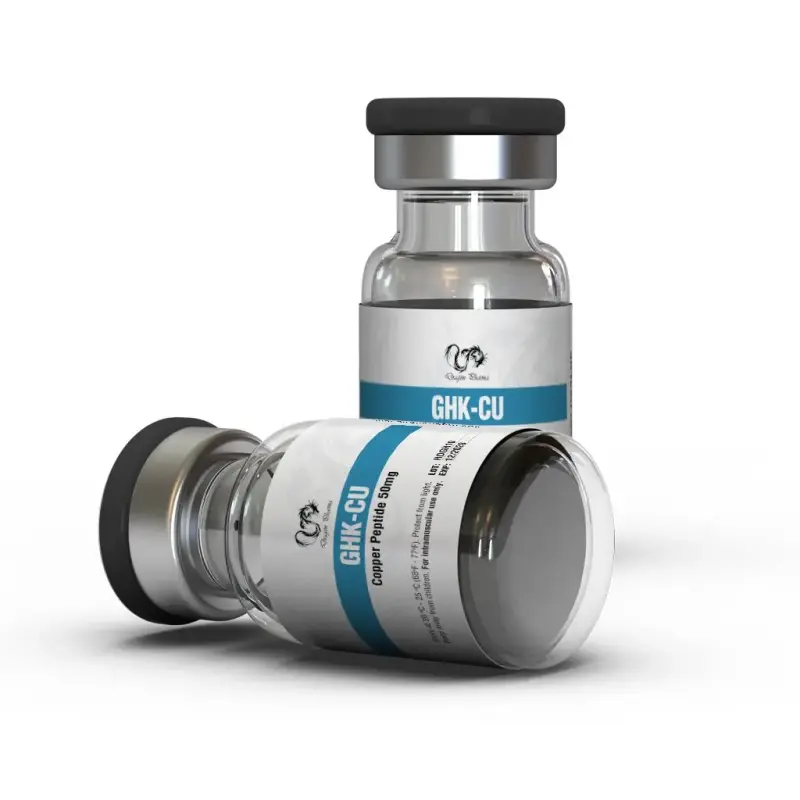
Dragon Pharma GHK-Cu Copper Peptide 10 mg and 50 mg Vials
Injection · 10 mg · vial
In stock · ships within 24h
Out of stock
$120.00
GHK-Cu is a copper-binding tripeptide studied for wound healing and collagen synthesis, sold as a lyophilized research powder in 10 mg and 50 mg vials. No human half-life has been established and no validated human dose exists, so the vial is a research material rather than a medicine. It is dissolved with bacteriostatic water before use.
GMP-manufactured and HPLC-verified, with a COA per batch. Dragon Pharma GHK-Cu for sale with U.S. domestic shipping.
Strength
Not available in this combination
Shipping
Not available in this combination
Discreet plain packaging
Worldwide reship guarantee
Crypto & card accepted
Product overview
Dragon Pharma GHK-Cu Copper Peptide Research Vials
GHK-Cu is a short copper-binding tripeptide, the complex of the GHK sequence with copper at a one to one stoichiometry. Published work is dominated by laboratory models and by topical application, where the peptide is studied for wound healing, collagen synthesis and an anti-inflammatory role. No human half-life has been established and no validated human dose exists, so the vial is positioned as a research material next to the other repair peptides in the catalogue, such as BPC-157 and TB-500.
Variant Comparison
| Variant | Content | Best use |
|---|---|---|
| GHK-CU 10 mg | Single lyophilized vial of 10 mg | Small pilot work and short experiments |
| GHK-CU 50 mg | Single lyophilized vial of 50 mg | Larger runs of the same experiment |
The two vials differ only in the amount of powder, and the 50 mg vial is the only strength currently shown with an active price on the page. A larger vial means fewer weighings, but a reconstituted solution still has to be used within the stability window, which is the practical reason to choose the size that matches the work planned.
How GHK-Cu Works in Model Systems
The peptide carries copper into cells and is studied for the way it influences collagen deposition and tissue remodelling in model systems. Because it is a small peptide, it does not survive the digestive tract intact, which is why the material is handled as an injectable research powder or applied topically in the literature. Vendor guidance suggests dissolving the powder in two to five millilitres of diluent, giving roughly 10 to 25 mg per millilitre, and systemic amounts of 1 to 2 mg per day appear in model work rather than in human dosing.
Reconstitution & Handling
Reconstitution is done with bacteriostatic water, added slowly down the side of the vial, and the solution is stored refrigerated. The lyophilized powder keeps better cold and dry. Any schedule built around it is a research design rather than a treatment plan, and the companion peptide Melanotan II is handled in the same way in this catalogue.
Quality & Authenticity
Each batch is produced under GMP conditions and checked by third-party HPLC, with a Certificate of Analysis held for the batch. Store lyophilized vials cold, keep the reconstituted solution refrigerated, and do not freeze it.
For laboratory research only. Consult a healthcare professional before use.
Specifications
| Trade Name | GHK-Cu (copper peptide) |
| Generic Name | Copper tripeptide-1, GHK-Cu complex |
| Manufacturer | Dragon Pharma |
| Dosage | 10 mg and 50 mg lyophilized vials |
| Package | Single sealed vial per unit, diluent not included |
| Drug Class | Research peptide, copper-binding tripeptide |
| Administration | Reconstituted with bacteriostatic water, research handling only |
| Reference Half-Life | Not established in humans in the cited sources |
| Shipping | U.S. domestic active, International currently unavailable |
Stacks
Consult a healthcare professional before any cycle. Doses are common community protocols.
FAQ
Before you ask
Questions, answered
It is a copper-binding tripeptide supplied as lyophilized vials of 10 mg and 50 mg. Published work studies it for wound healing, collagen synthesis and an anti-inflammatory role, mostly in laboratory models and in topical use. It has no established human half-life and no validated human dose, so it is sold and used here as a research material rather than as a medicine.
The powder is the same, so the choice is about the volume of work. A 10 mg vial suits small pilot experiments and short runs, while the 50 mg vial suits larger runs of the same design or several replicates. The 50 mg vial is the only strength currently shown with an active price on the storefront page.
Dissolve the powder with bacteriostatic water added slowly down the inside wall of the vial, then swirl rather than shake. Vendor guidance suggests two to five millilitres of diluent for a 50 mg vial, which gives roughly 10 to 25 mg per millilitre. Keep the reconstituted solution refrigerated and do not freeze it, because freezing damages the peptide.
No. The fact sheet states plainly that the human half-life is not established, and no validated human dosing exists. The amounts that appear in the literature, around one to two milligrams per day systemically, come from model work rather than from human studies. Anything written about human use of the powder is therefore an extrapolation, not a confirmed schedule.
The sources used here do not document a human safety profile for the powder, because human pharmacokinetics have not been established. Reported experience comes from topical and laboratory work, where the material is generally described as well tolerated in those settings. Anything beyond that is not supported by the sources, and this vial is not intended for human use.
They are different peptides with different mechanisms, which is why they appear as separate cards. BPC-157 is studied for its own set of tissue-repair effects, while GHK-Cu is defined by its copper-binding tripeptide structure and its role in collagen-related research. Researchers sometimes run both in parallel, but they are not substitutes for one another.
Yes. The 50 mg vial is listed in stock at 120.00 USD for international shipping and 110.00 USD for U.S. domestic delivery, while the 10 mg vial is displayed as an option without an active price. International shipping is otherwise marked as currently unavailable on this page, so confirm availability before ordering. All items are intended strictly for laboratory research.
No reviews yet
Be the first to share your experience with Dragon Pharma GHK-Cu Copper Peptide 10 mg and 50 mg Vials
Log in to write a reviewComplete the cycle
Stack it with
International
Available Domestic
 International
 International
Available Domestic