 Lab Tested
British Dragon
British Dragon Testabol Testosterone 250 and 100 mg Vials
No reviews yet
Out of stock
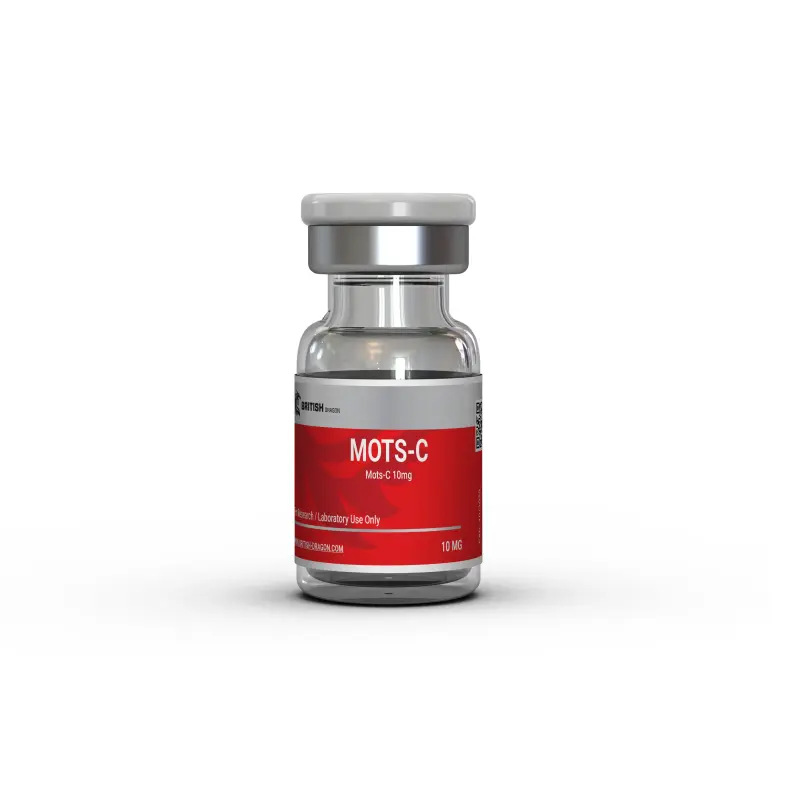
Injection · 10 mg · vial
British Dragon MOTS-c is a lyophilized mitochondrial-derived peptide supplied at 10 mg per vial, a 16 amino acid standard for AMPK pathway and metabolic homeostasis research. It is reconstituted with bacteriostatic water before laboratory work.
GMP-manufactured and HPLC-verified, with a Certificate of Analysis on file per batch. MOTS-c for sale with international shipping at GenXXLGear.
British Dragon MOTS-c is a lyophilized mitochondrial-derived peptide presented at 10 mg per vial for laboratory research. It is a short peptide coded inside the mitochondrial 12S rRNA region, and published work uses it as a standard in metabolic studies because it feeds into the AMPK pathway and shifts how cells handle glucose. Buy mots-c as a sealed vial, or compare it with the other metabolic standards in the catalogue.
MOTS-c is unusual because mitochondrial DNA rather than the nuclear genome encodes it, and it behaves as a signalling peptide that travels back to the nucleus when a cell is under metabolic stress. In cell and animal models it activates the AMPK pathway, the energy-sensing route governing glucose uptake, fatty acid oxidation and insulin response. No human pharmacokinetic profile has been published for the peptide, so the active window is not established, and published work uses acute exposure designs rather than long steady-state models. Related standards are described on the AICAR and Ipamorelin pages.
The vial arrives as a lyophilized cake and is reconstituted with bacteriostatic water, added down the wall of the vial and mixed by gentle swirling. Working solutions are kept cold and protected from light, and unopened vials stay at room temperature away from heat, with 2 to 8 degrees or lower as the reference condition. A GHRH-class comparator for metabolic work is Tesamorelin, the same molecule from another supplier is covered on the Axiolabs MOTS-c page, and every batch is GMP-manufactured, HPLC-tested and shipped with a Certificate of Analysis.
For laboratory research only. Consult a healthcare professional before use. Figures quoted are research references and community notes, not a prescription.
| Trade Name | MOTS-c |
| Generic Name | Mitochondrial-derived peptide MOTS-c |
| Manufacturer | British Dragon |
| Dosage | 10 mg per vial |
| Package | Sealed lyophilized vial |
| Drug Class | Mitochondrial-derived peptide, AMPK pathway standard |
| Administration | Reconstituted with bacteriostatic water |
| Storage | Room temperature, or 2 to 8 degrees |
| Prescription Status | Not a licensed medicine, research material only |
| Verification | GMP production, third-party HPLC, COA per batch |
| Shipping | International and U.S. options, handling 1-2 days |
Before you ask
It is a lyophilized mitochondrial-derived peptide supplied at 10 mg per sealed vial for laboratory research. The sequence is 16 amino acids long and is coded inside the mitochondrial 12S rRNA region, which makes it a mitochondrial rather than a nuclear gene product. It is bought as a metabolic research standard, not as a finished medicine.
The lyophilized cake is dissolved in bacteriostatic water, added slowly against the inside wall of the vial and mixed by gentle swirling rather than shaking, because foaming can damage a peptide. The resulting solution is kept cold and used within the period set by the study protocol. Dry powder is far more stable than a working solution, so vials are reconstituted as needed.
No human pharmacokinetic profile has been published for MOTS-c, so the half-life is not established and no figure should be assumed. It is a 16 amino acid peptide produced inside the mitochondrion rather than a stabilised long-acting analogue. Published metabolic work therefore uses acute exposure models rather than long infusion designs, and any statement of a precise clearance time remains unconfirmed.
Published work is still at the cell and animal model stage, so a human side effect profile is not established and none should be assumed. The observations that do appear relate to metabolic markers rather than to organ toxicity. Any handling of the powder should follow laboratory practice: gloves, eye protection and a ventilated bench, since it is sold as a research chemical.
Both are used in AMPK research but they act from different directions. AICAR is a small molecule that enters the cell and mimics AMP at the kinase, while MOTS-c is a peptide hormone that reaches the pathway through cellular signalling after metabolic stress. Running the two in one plate is a standard way to compare the two entry points, and the AICAR page describes the small molecule side.
The 10 mg vial is listed on this page. Availability is shown on the product page, which also takes an email address for restock notices when the item is out of stock. Shipping details sit in the product data: international delivery plus a U.S. domestic route where stock allows, with one to two business days of handling after an order is placed.
Be the first to share your experience with British Dragon MOTS-c 10 mg Mitochondrial Derived Peptide
Log in to write a reviewComplete the cycle
Lab Tested
Out of stock
Out of stock
Out of stock