Kalpa Pharmaceuticals
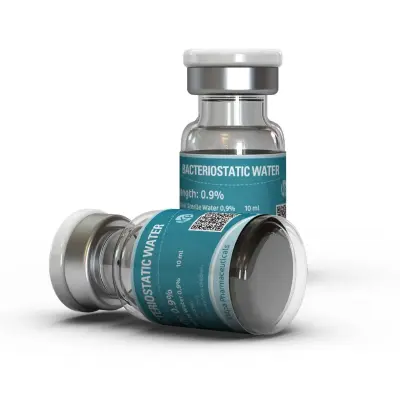
Kalpa Pharma Bacteriostatic Water 0.9% Sterile Diluent Vial
No reviews yet
Out of stock
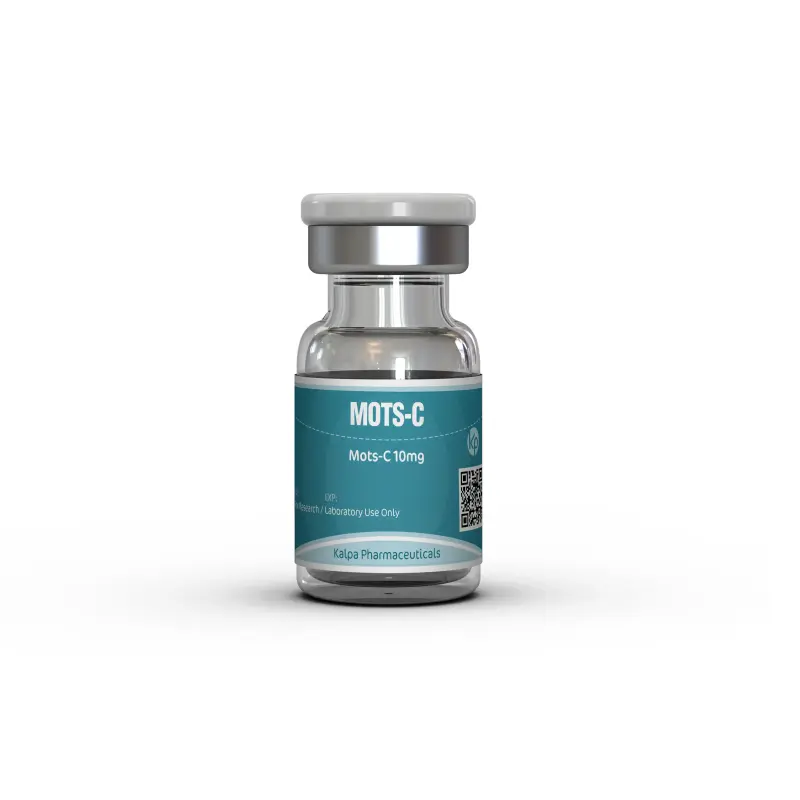
Injection · 10mg · vial
Kalpa MOTS-c 10 mg is a lyophilised research vial of the 16 amino acid mitochondrial-derived peptide encoded by a mitochondrial gene rather than by nuclear DNA.
Each vial is GMP-manufactured and HPLC-verified with a Certificate of Analysis on file, and reconstitutes with bacteriostatic water. MOTS-c for sale with U.S. domestic and international shipping.
Kalpa MOTS-c 10 mg supplies the mitochondrial-derived peptide as a lyophilised vial. MOTS-c is 16 amino acids long and is encoded by the mitochondrial gene MT-RNR1 rather than by nuclear DNA, which makes it a signalling molecule produced inside the mitochondrion. Research treats it as a metabolic modulator, so the vial belongs to metabolic work rather than to hormone work, and no approved medicine contains the peptide.
The peptide is made inside mitochondria and then acts on cells as a metabolic signal, with work describing effects on the AMPK pathway, glucose handling and lipid use. Mouse studies link it to better metabolic fitness, lower fat mass and improved insulin sensitivity, and those are mouse outcomes rather than human ones. No human half-life is established and no approved label exists, so every quantitative statement about the peptide comes from animal or cell work.
A 10 mg vial with 1 ml of bacteriostatic water gives 10 mg per ml, so 1 mg measures 0.1 ml on a U-100 syringe and 5 mg measures 0.5 ml; with 2 ml the same vial gives 5 mg per ml and every volume doubles. Add the water down the vial wall and do not shake it, then keep the solution at 2-8 C without freezing. The Axiolabs MOTS-c and MOTS-c entries cover the same peptide with other vial sizes.
Every batch is produced under GMP conditions and checked by independent HPLC, with the Certificate of Analysis held for the batch. Reported findings are limited to animal models, and injection site reactions are the expected local effect in any peptide work. MOTS-c is prohibited at all times in sport under class S4.4 of the WADA prohibited list, the class for metabolic modulators, which is a firm restriction rather than a monitoring entry.
For laboratory research only. Consult a healthcare professional before use.
| Trade Name | Kalpa MOTS-c 10 mg |
| Generic Name | MOTS-c, mitochondrial-derived peptide |
| Manufacturer | Kalpa Pharmaceuticals |
| Dosage | 10 mg per lyophilised vial |
| Package | 1 vial of powder for reconstitution |
| Drug Class | Research peptide, metabolic modulator |
| Administration | Reconstitute with bacteriostatic water |
| Reference Half-Life | Not established in humans |
| Shipping | International and U.S. domestic options |
Consult a healthcare professional before any cycle. Where a stack suppresses natural testosterone, PCT is required. Doses are common community protocols.
Before you ask
It is a lyophilised research vial containing 10 mg of MOTS-c, a peptide of 16 amino acids encoded by the mitochondrial gene MT-RNR1 rather than by nuclear DNA. That origin makes it a mitochondrial-derived signalling molecule, and research treats it as a metabolic modulator. No approved medicine contains the peptide, so the vial is a laboratory material on the Kalpa peptide range.
It is produced inside mitochondria and then acts on the cell as a metabolic signal, with published work describing effects on the AMPK pathway, glucose handling and lipid use. Mouse studies link it to better metabolic fitness, lower fat mass and improved insulin sensitivity. Those results come from animal models, and no human outcome data exist for the peptide.
It is not established. There is no approved label and no published human pharmacokinetic profile, so the project fact base records the value as unconfirmed. Any timing used in laboratory work is therefore a design choice rather than a measured figure, and comparisons with peptides that do have human data should be treated with caution.
One millilitre of bacteriostatic water gives 10 mg per ml, so 1 mg measures 0.1 ml on a U-100 syringe and 5 mg measures 0.5 ml; 2 ml gives 5 mg per ml and doubles every volume. Add the water down the vial wall and do not shake the solution, then store it at 2-8 C without freezing and observe the use window on the vial.
Data are limited to animal models, so human side effects are unknown. Injection site reactions are the expected local effect whenever a peptide is given by that route, and nothing beyond that has been described in controlled work. Because the peptide has no approved form, there is also no formal adverse event list to consult.
Yes. MOTS-c is prohibited at all times under class S4.4 of the WADA prohibited list, the class covering metabolic modulators. That is a firm ban rather than a monitoring entry, and it applies in and out of competition. The same class covers a range of metabolic compounds, so the restriction is not specific to this peptide alone.
Yes. The 10 mg vial is listed on this page with international and U.S. domestic shipping options, and the price charged matches the option you select. Orders are dispatched after payment confirmation. The product is sold strictly for laboratory research and is not a licensed medicine in any country.
Be the first to share your experience with Kalpa MOTS-c 10 mg Mitochondrial Peptide Research Vial for Labs
Log in to write a reviewComplete the cycle
Out of stock
 U.S Domestic
Available Domestic
Out of stock