Generic Peptides
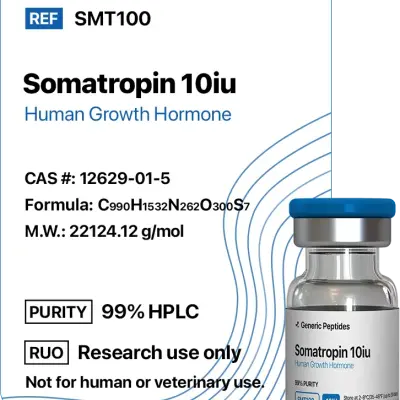
Generic Peptides Somatropin 100 to 200 IU HGH Kits for Sale
No reviews yet
$280.00
Out of stock
Injection · 10 mg · vial
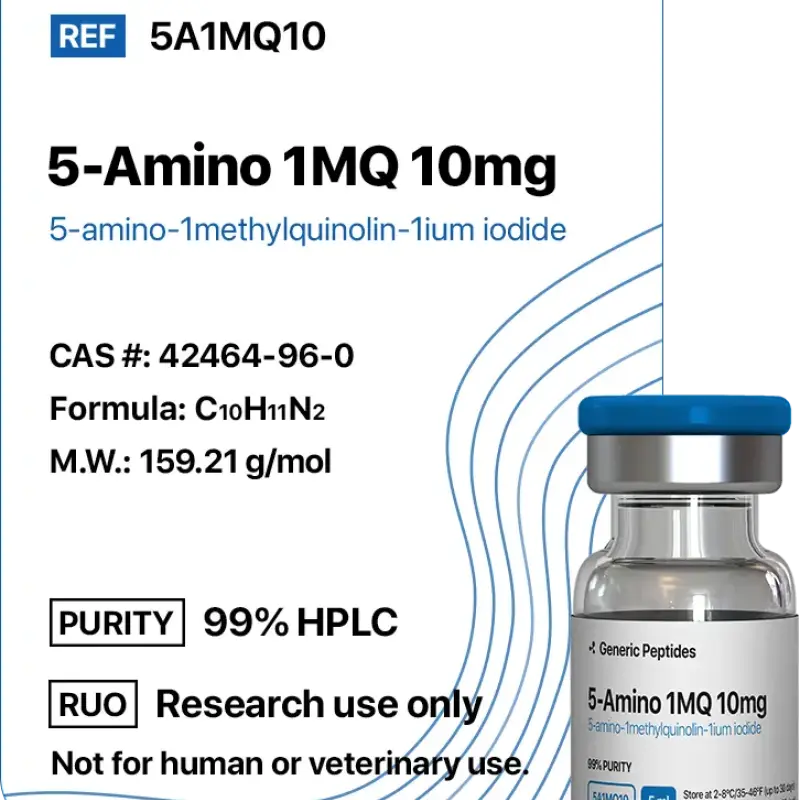
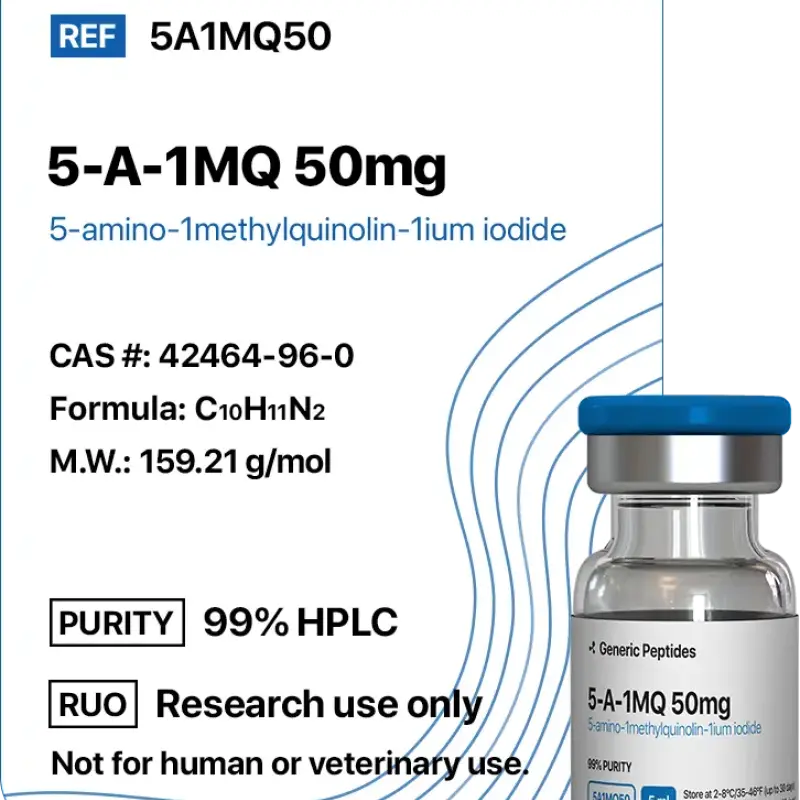
Generic Peptides 5-Amino-1MQ is 5-amino-1-methylquinolinium, a small synthetic molecule studied as an NNMT inhibitor in metabolic research. It is not a peptide. Available for purchase in two vial sizes: 10 mg and 50 mg.
GMP-manufactured, each batch is HPLC-verified with the Certificate of Analysis (COA) on file. 5-Amino-1MQ for sale with U.S. domestic and worldwide shipping.
Generic Peptides 5-Amino-1MQ is 5-amino-1-methylquinolinium, a small synthetic molecule supplied as a lyophilized powder in 10 mg and 50 mg vials. It sits in the peptide line because of how the catalogue is grouped, but chemically it is not a peptide: it is a quinolinium salt studied as an inhibitor of nicotinamide N-methyltransferase, an enzyme linked to fat-cell metabolism. Buy 5-Amino-1MQ for metabolic research, and treat the label as a research reagent rather than a medicine.
Both vials hold the same compound and differ only in the amount of powder.
| Variant | Dosage | Form and quantity | Best use |
|---|---|---|---|
| 5-Amino-1MQ 10 mg | 10 mg per vial | Lyophilized vial | Pilot work |
| 5-Amino-1MQ 50 mg | 50 mg per vial | Lyophilized vial | Repeated sampling |
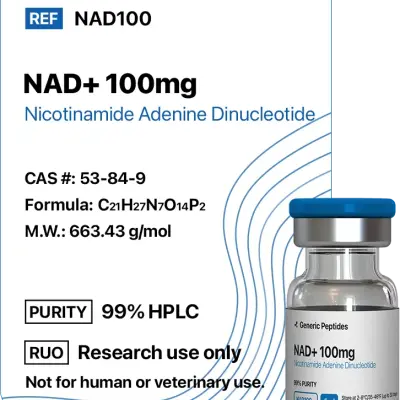
At 10 mg in 1 mL the mix reads 10 mg/mL, so 10 units on a U-100 syringe is 1 mg; the 50 mg vial in 5 mL matches that concentration, and in 10 mL it halves to 5 mg/mL, where the same draw is 500 mcg. Metabolic designs usually set the compound beside an energy-sensing agent such as AICAR or the cofactor NAD+, and in fat-mass work the comparator arm is often AOD-9604.
Nicotinamide N-methyltransferase, or NNMT, consumes the methyl donor SAM to break down nicotinamide, and it is over-expressed in adipose tissue in several metabolic models. 5-Amino-1-methylquinolinium is described as an inhibitor of that enzyme. There is no human pharmacokinetic profile, and animal work has used 32 mg/kg subcutaneously once daily; those mouse figures are not a human dose and are given here only as a record of what has been published. Because the enzyme consumes a methyl donor, long-term inhibition raises a theoretical question about methylation balance that the sources describe as described in models but not characterised in people.
Add bacteriostatic water down the vial wall and swirl; do not shake. Keep the sealed powder at 2-8 C, away from light, and the mixed solution at 2-8 C without freezing. As a small molecule the compound is usually more stable in solution than a peptide, but no product-specific stability data are published.
No human dose exists, no regulator has approved the compound, and these vials are research material only. The only amounts in the literature come from rodent studies, so nothing on this page should be read as a protocol. Record every figure as a research reference, and keep a separate group for a comparator such as Semaglutide or Retatrutide if the design also follows an incretin pathway.
For laboratory research only, not for human or veterinary use. Information on this page is educational and does not constitute medical advice. Consult a qualified healthcare professional before handling any compound.
| Trade Name | 5-Amino-1MQ |
| Generic Name | 5-Amino-1-methylquinolinium |
| Manufacturer | Generic Peptides |
| Dosage | 10 mg or 50 mg per vial |
| Package | Lyophilized vial |
| Drug Class | Small molecule NNMT inhibitor (research) |
| Administration | Research use only |
| Storage | Lyophilized 2-8 C; mixed 2-8 C, do not freeze |
| Prescription Status | Not approved anywhere; research reagent |
| Verification | Batch details confirmed with supplier |
| Shipping | U.S. domestic option + international |
For laboratory research only. Consult a healthcare professional before handling any compound. Amounts shown are research references, not recommended human doses.
Before you ask
It is 5-amino-1-methylquinolinium, a small synthetic molecule, and it is not a peptide. It is grouped with the peptide line because of how the catalogue is organised. The compound is studied as an inhibitor of nicotinamide N-methyltransferase, or NNMT, an enzyme that is over-expressed in adipose tissue in several metabolic models.
Only the amount of powder differs. A 10 mg vial in 1 ml reads 10 mg/ml, so 10 units on a U-100 syringe is 1 mg. The 50 mg vial in 5 ml gives the same concentration, and in 10 ml it halves to 5 mg/ml, where the same draw is 500 mcg. Small vials suit pilot work, large vials suit repeated sampling.
Let bacteriostatic water run down the inside wall and swirl the vial until the powder dissolves, without shaking. Keep the sealed powder at 2-8 C away from light and the mixed solution at 2-8 C without freezing. As a small molecule the compound is generally more stable in solution than a peptide, but no product-specific stability data are published.
The published work is animal work. One mouse model used 32 mg/kg given subcutaneously once daily. That figure describes a rodent study and is not a human dose, and no human pharmacokinetic profile exists, so the amount cannot be scaled from a vial size. Treat every figure as a research reference only.
Injection site reactions are the common class effect for any injected compound. Beyond that the record is thin: NNMT consumes the methyl donor SAM, so long-term inhibition raises a theoretical question about methylation balance that has been described in models but never characterised in people. No long-term safety data exist, and no regulator has evaluated the substance.
It has no approval anywhere and is not registered as a medicine in any country, so it is handled as a research reagent. It is not named by name on the WADA Prohibited List, but as an unapproved substance it can fall under class S0. The material sold here carries no approval from the FDA or the EMA.
It is stocked here in 10 mg and 50 mg lyophilized vials, produced under GMP and HPLC-verified with the Certificate of Analysis on file for each batch. Both sizes carry a U.S. domestic price alongside international shipping, and the page above lists the current figure and availability for each option.
Be the first to share your experience with Generic Peptides 5-Amino-1MQ 10 and 50 mg NNMT Inhibitor
Log in to write a reviewComplete the cycle
Out of stock
Out of stock
Out of stock